

Recently, RAL successfully completed the trial of 825 corrosion-resisting nickel-based alloys / X65 composite board for pipeline steel in the production line of vacuum rolling composite plate in Nanjing Iron & Steel Group Corp. As is tested, the interfacial bonding properties, low-temperature impact toughness and corrosion-resisting property of the composite plate are able to meet users’ requirements.
Compared with the austenitic stainless steel and other corrosion resistant materials, 825 nickel-based alloys exhibited excellent resistance to pitting corrosion, intergranular corrosion and stress corrosion in all kinds of corrosive environments such as H2S, Cl- and alkali metal. While in corrosive environments of high-temperature and high-pressure, it also demonstrated sound corrosion resistance. However, since the 825 alloy contains exorbitant nickel (> 40%), its high price has limited its widespread application. 825 alloy and inexpensive composite board for steel pipeline not only has good corrosion-resistant performance, but also greatly reduces the cost, and also posses excellent mechanical properties of high-strength pipeline steel substrate, with a broad prospect of application. To meet the demand for the anti-H2S corrosion pipelines of the oil and gas pipelines between China and Turkmenistan, Northeastern University and Nanjing Steel have carried out cooperative research and development on the vacuum composite rolling 825 alloys / composite board for pipeline steel. Based on the research on the composite mechanism and the laboratory trial, we successfully completed the development and trial of the production on site. With the development of the product, RAL will further gain competitive edges in the research and development in the field of vacuum rolling composite dissimilar metal plate.
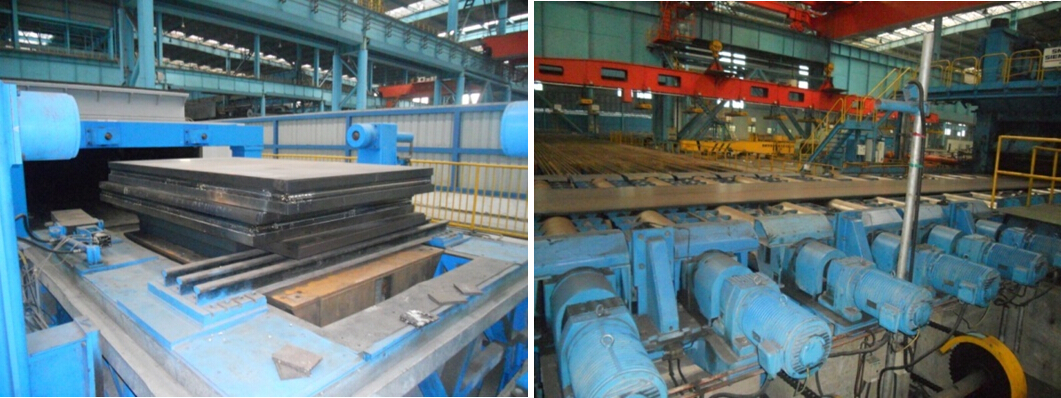
The production process of 825 alloy / vacuum rolling composite board for pipeline steel
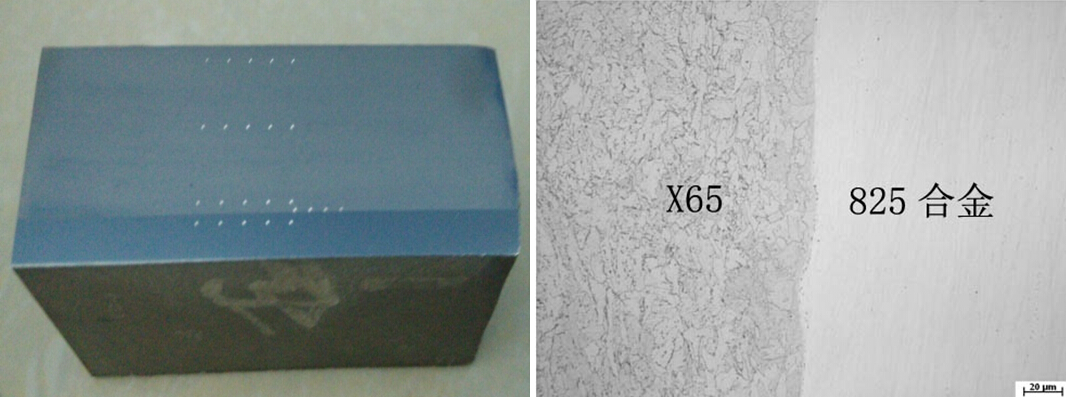
Interfacial bonding of 825 alloy / pipeline steel composite
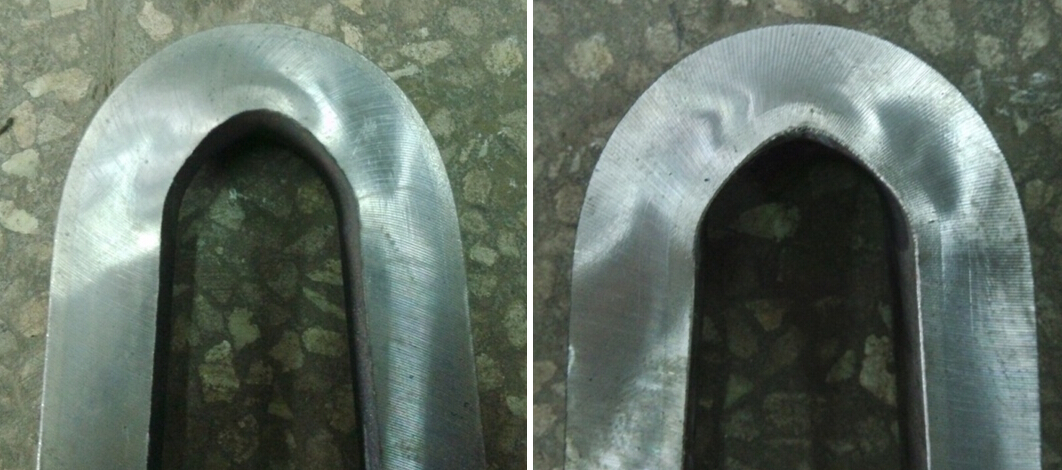
Test on the internal and external bending of the full-size sample