

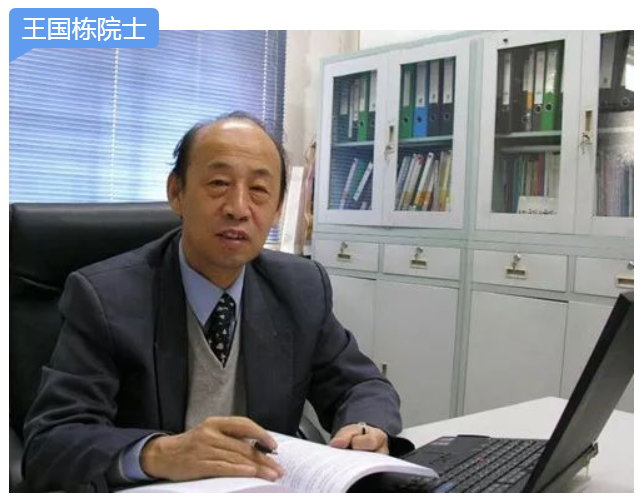
Long before the release of the “Double First-Class” construction plan, Wang Guodong, an academician of the Chinese Academy of Engineering and the deputy director of the Academic Committee of the State Key Laboratory of Northeastern University, had paid close attention to fields related to talents cultivation, such as collaborative innovation, integration of science and education, and connotation development. So far, there are different versions of PPT in his computer documentation, covering eight main points.
"I told the school leaders, told the partner universities, and told the teachers and students..." said Wang Guodong, there is only one central idea, that is, to vigorously carry out collaborative innovation, so as to develop a path with Chinese characteristics in technological innovation and talent cultivation in the new era.
Achieving intensive development through the integration of science and education
China Science Daily: How do we view the Chinese characteristics in the new era of technological innovation by comparing Chinese and Western higher education?
Wang Guodong: We should establish the concept of engaging in scientific research and cultivating talents to serve socialism. People engaging in scientific research in Western countries are mostly driven by their personal interests, while the important driving force for scientists in China should be national development, social welfare, and people's livelihood. Based on General Secretary Xi Jinping’s instructions on “four firsts”, Chinese Academy of Sciences added “three orientations” in front of the “four firsts” – that is, orientation to the frontiers of science and technology in the world, orientation to the major needs of the country, and orientation to the main battlefield of the national economy. These are basic requirements of the Party and the State for our scientific research personnel.
We must focus on the importance of original innovation. In the course of long-term follow-up, China's scientific research has become dependent to a certain degree. It is necessary for us to shift from running after others to running side by side, to leading the run, and more importantly, the original innovation. Young people have endless creativity, so teachers should encourage the students to develop their own ideas. In the process of studying the preparation of ultra-strong magnetic properties of electrical steel, students often put forward some "whimsy", and we have created better results than conventional processes.
We also need to develop the competitive awareness in international cooperation. In the past, people always said that China's higher education should be connected with Western higher education. In fact, instead of simply “being connected”, we should learn from their strengths and meanwhile compete with them. It is necessary for us to learn from them and to promote competition, as we can never reach the leading position without competition. In cooperation, only by the awareness of competing and surpassing can we achieve preeminence.
China Science Daily: In accordance with the Chinese characteristics of technological innovation and talent cultivation, what should be the priority for China's colleges and universities?
Wang Guodong: The most important thing for colleges and universities is to achieve intensive development through the integration of science and education. As General Secretary Xi Jinping said, the construction of first-class universities and first-class disciplines should be accelerated, so as to achieve intensive development of higher education. In my opinion, to achieve intensive development, colleges and universities must do first-class scientific research and cultivate first-class talents in the process of first-class scientific research. The essence is first-class scientific research, integration of science and education, and educating people through scientific research. The concept of intensive development encourages students to learn to swim while swimming, to learn scientific research while doing scientific research, and to learn first-class scientific research while doing first-class scientific research. At present, the engineering education in colleges and universities covers some experimental sessions, but they are far from enough, and the updating of content is too slow. Colleges and universities should encourage teachers to engage in first-class scientific research and produce first-class scientific research results, and encourage students to participate in the process. We should cultivate students' quality during the research process and make them grow into first-class talents.
It is necessary for colleges and universities to implement the innovation project of talent evaluation mechanism and build a scientific research and teaching team that is pragmatic and truth-seeking. "Empty talk harms the nation, and practical action helps it thrive." Earnest working is the foundation of collaborative innovation in universities. Research papers, citation rates, and so on are all Western evaluation criteria. If we just follow their way, the whole direction will go wrong. Our criteria should be based on actual innovation performance, ability, and contribution. "Action", "truth” and "honesty" are the most important words. The requirements for teachers and students are the same, namely “hardworking, practical and efficient”. I don’t care which magazine has published your paper, but I do care about the content of the published paper and the actual contribution of your innovation.

Engineering education should pay special attention to collaborative innovation
China Science Daily: As a professor of engineering, in your opinion, what should be the focus in the Chinese characteristics of technological innovation and talent cultivation?
Wang Guodong: Scientific research and talent training should focus on collaborative innovation. Collaborative innovation should be carried out in four dimensions. The first dimension is industry, university, research and application; the second dimension is interdisciplinary approach; the third dimension is industry collaboration, and the fourth dimension is integration of research, development, engineering and service. These four dimensions of collaborative innovation can bring together different aspects of resources.
Research, development, engineering and service form a successive chain of innovation. In the past, we held the view of the relay theory. The university only engaged in research and development, and engineering and application were transferred to the enterprises. In the speech of General Secretary Xi Jinping, it is mentioned that scientific and technological findings can achieve its innovative value and its innovation-driven development only by integrating with the needs of the country, people's requirements, and market demand, and by completing the three-level jump from scientific research, experimental development, and promotion and application. My experience is that we must complete the three-level jump of basic research, technological development, and industrial application. Even if 99.9% is completed, it is still unqualified. This requires different roles in the chain be added to collaborative innovation, so as to complete innovation and transformation of scientific achievements through joint efforts.
China Science Daily:How can collaborative innovation play a role in talent cultivation?
Wang Guodong: In fact, an important experience in talent cultivation is the collaborative innovation. We should mobilize the corporate team, encourage them not only to give professors technical ideas, but also to help colleges and universities train talents. University professors are so-called experts, but corporate personnel work in the front line directly face the production practices. They may know better than professors on the problems in some points and the places that need improvements. The practical experience and knowledge of the personnel on the site is of great value to the students and teachers.
Engineering science and technology education in colleges and universities will also be achieved in the process of scientific and technological achievements transformation. Engineering technology is an indispensable skill for engineering students. This is not to encourage universities to run companies and build factories, but to encourage universities to strengthen collaborative innovation. In the transformation of achievements, colleges and universities can develop students' engineering ability by cooperating with enterprises to solve problems. In the process, students can understand whether the plan is feasible or not, whether production and application are feasible or not, etc., and they will develop their own ideas and solutions when they encounter problems in future work. These ideas will be more realistic and more comprehensive. They will guide them on the right track, and will be helpful for innovation, application, and transformation.

It is imperative to promote educational informationization.
China Science Daily:In terms of the future higher education, which aspects do you think we should focus on the quality of students?
Wang Guodong: The basic qualities of our talents should include social responsibility, innovative spirit, and practical ability. Informatization and intelligent literacy will also be a basic requirement for the capabilities and qualities of future talents.
We advocate the concept of "integration and communication", and “communication” refers to interconnection. The future world is a digital world, and future education must also speak with data. Education should use the facilities provided by the Internet, so as to reproduce the laws that were invisible and intangible in colleges and universities by making use of the digital information of enterprises. Universities will guide students to learn information and intelligence knowledge through discipline intersection, and cultivate information and intelligent literacy, which will play an important role in talent growth.
China Science Daily: Specifically, how to realize informationization and intellectuallization in colleges and universities?
Wang Guodong:Today's factories have gradually become digital, unmanned, and intelligent. If we still organize our teaching in traditional ways, for example, organizing an internship, I am afraid it will not work. In this regard, I put forward the following suggestions. First of all, colleges and universities should build a big data platform integrating management, teaching and scientific research. This platform is interconnected with related enterprises, and the required production process information is provided by those enterprises. The teachers and students in colleges and universities develop the VR/AR/AI software for the visualization of production data. In this way, we can not only reproduce the real scenes that can't be seen in the enterprise in the classroom, but also grasp the laws of physical and chemical changes of the chemical reactors such as blast furnaces and converters, and the work pieces such as continuous casting slab and rolling stocks through software analysis. In this way, the students will have a more essential, more realistic, and more accurate understanding.
Second, universities also need to build quasi-industrial bases for innovative ideas and research programs. Except for the construction scale, the physical structure, control system, data collection and processing are all the same as, even better than those in the enterprises. In this way, teachers and students can conduct research and innovation projects conveniently and very close to reality. Of course, teachers and students can develop VR/AR/AI software, and analyze and research the measured big data to get regular research results. The results obtained in this way at this scale are easily accepted by the enterprises, and thus can be converted into applicable results on industrial scale.
In doing so, experiments carried out by the students are not to play with small bottles and cans in the laboratory, but to conduct experiments and do research on a scale close to the big industry. Therefore, the experimental results are credible, usable, and can be extended to real large industrial production. The advantage of the information and intelligent era lies in the fact that it is not limited to certain geographical areas and disciplines. The big data platform is not only suitable for one major or one university, but also for other majors and other universities.
The future engineering education will carry out scientific research, teaching, experiment, and internship on the big platform. It will be a helpful tool for the teaching reform of production and education integration, research and education, and intensive development. I look forward to it.