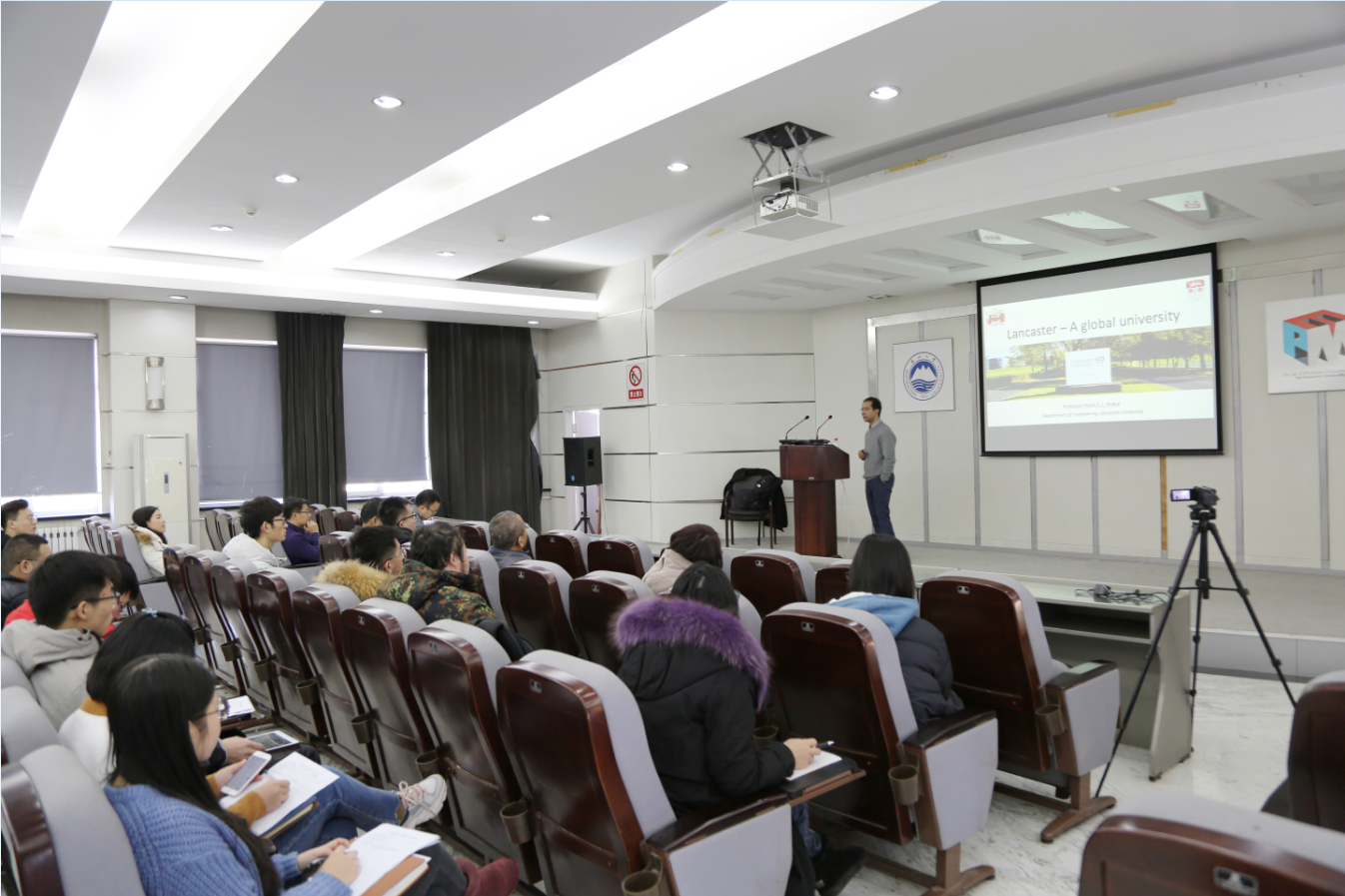
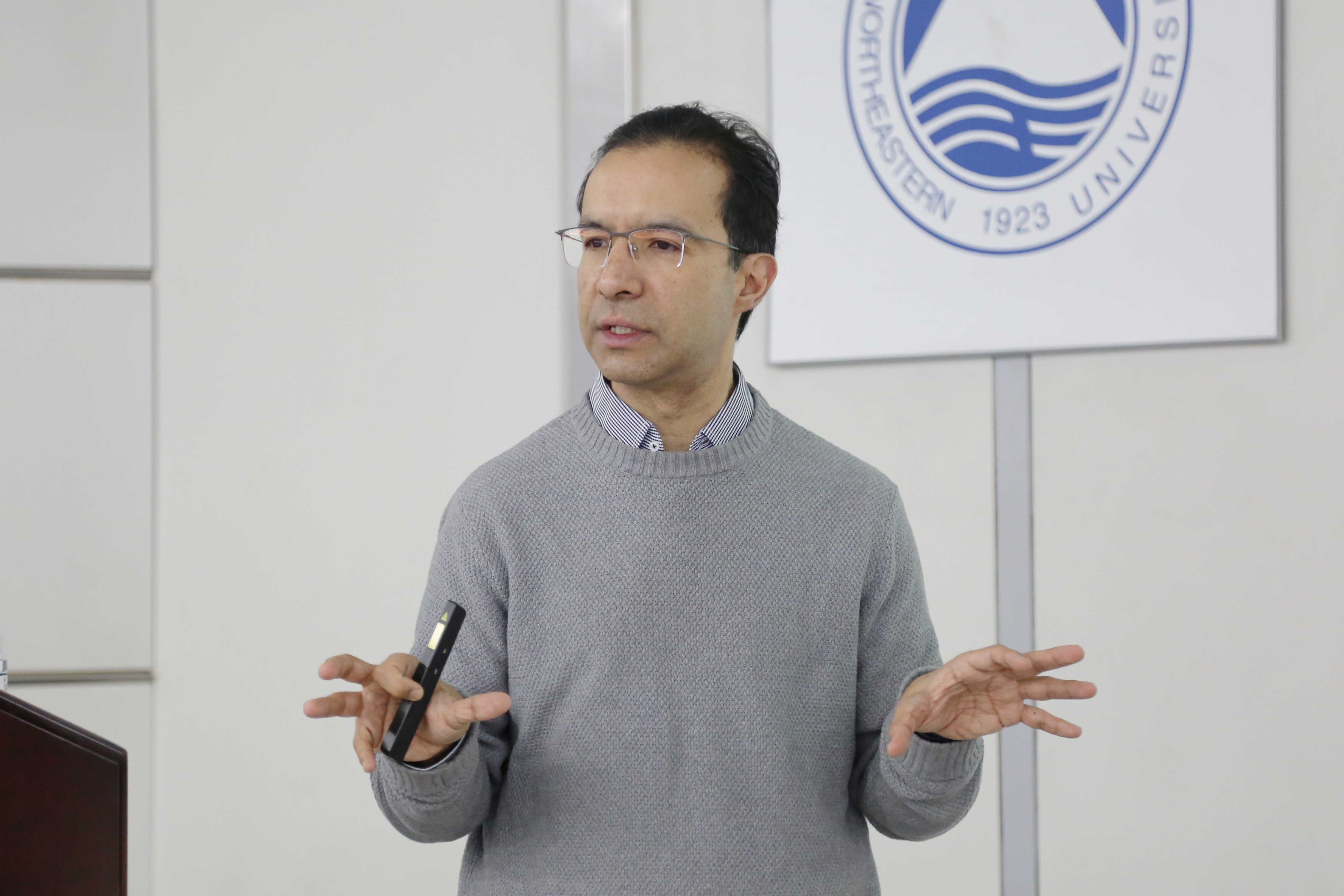
12月31日上午,应轧制技术及连轧自动化国家重点实验室(RAL)徐伟教授邀请,英国兰卡斯特大学教授,英国皇家工程院讲席教授Pedro Rivera Diaz Del Castillo在EPM 4楼学术报告厅为我室师生作了题为“Strategies for the design of steels to resist embrittlement”的学术报告,报告会由贾涛副教授主持。
报告摘要:
Hydrogen embrittlement (HE) is known to be a major cause for failure, often unpredicted, in a variety of industries. Hydrogen is readily available through direct exposure or decomposition of water, oil or acids. Such exposure at the interface of components leads to adsorption and diffusion into the bulk which, upon interaction with the microstructure, rapidly diffuses down the gradient of lattice strains typically engineered to control strength, ductility and toughness – H therefore induces the opposite effect of what is desired from complex engineered microstructures. This presentation examines three crucial cases of hydrogen embrittlement with a significant environmental impact. HE in wind turbines, where life is decreased as damage is accelerated in heavily loaded components such as bearings and gears. Additively manufactured stainless steels, where the 3D printing process decreases materials waste whilst reducing energy associated to processing. Super duplex stainless steels used for hydrogen storage. Critical experiments are linked with modelling to single out the nature of HE whilst finding microstructural scenarios to diminish its deleterious effects.
专家简介
Pedro Rivera Diaz Del Castillo教授为兰卡斯特大学(Lancaster University)工学院终身教授,英国皇家工程院讲席教授,毕业于英国剑桥大学,曾任剑桥大学SKF大学科技中心主任,于2017年被评为LPW/皇家工程研究院增材制造合金和微结构设计教授,于2013年荣获剑桥大学材料系Vanadium奖,于2012年荣获墨西哥国家科学技术委员会国家工人研究专家称号,一直活跃在国际学术舞台并具有较高的知名度。
Rivera教授的研究小组专注于通过显微组织设计改善合金性能。研究中主要关注的性能包括强度、韧性、延展性、疲劳、腐蚀、氢脆和抗辐照性。其主要研究方向包括滚动接触疲劳下轴承钢微观组织变化的统一理论、控制多钢种滚动接触疲劳损伤的因素研究、马氏体高碳钢中残余奥氏体的稳定性调控研究等。其在针对钢铁材料相变,尤是亚稳奥氏体定性控制的物理冶金模型方面具有丰富而坚实研究基础。